Aggelos Kiayias
Greek cryptographer and computer scientist
- Life
- 1901 – present
- Born
- 1901
Aggelos Kiayias is a Greek cryptographer and computer scientist, is a professor at the University of Edinburgh and the chief science officer at Input Output Global, the blockchain company that developed Cardano.
Early Life and Education
Aggelos Kiayias (Greek: Άγγελος Κιαγιάς) is a Greek cryptographer and computer scientist. He received his PhD in 2002 from the City University of New York, where his doctoral advisors were Moti Yung and Stathis Zachos.
Career
Following his doctorate, Kiayias conducted research at the University of Connecticut, where from 2003 onward he focused on privacy and secure electronic voting using cryptography. He later held a position at the National and Kapodistrian University of Athens, where by 2015 he was identified as a professor of cryptography and computer security.
Kiayias subsequently joined the University of Edinburgh, where he holds the chair in cyber security and privacy and serves as director of the Blockchain Technology Laboratory, housed in the university's Bayes Centre. He is also a member of Edinburgh's Laboratory for Foundations of Computer Science. In 2017, he launched a blockchain course at Edinburgh, making it one of the first major European universities to offer such a course, according to the Financial Times. The Blockchain Technology Laboratory investigates decentralized systems in collaboration with industry and government bodies; by 2021 it listed nine staff and 21 researchers and PhD students.
In parallel with his academic role, Kiayias serves as chief science officer at Input Output Global (formerly IOHK), the blockchain technology company responsible for developing the Cardano platform.
Notable Work
Blockchain and Ouroboros
Kiayias has described how the problem of debt-ridden banks in Greece motivated him to concentrate on blockchain research as a means of widening access to financial services. Dissatisfied with the energy demands of proof-of-work protocols such as Bitcoin, he turned his attention to proof-of-stake mechanisms. In 2016, he led a team that published an ePrint paper describing the Ouroboros blockchain consensus protocol, which became foundational to the Cardano platform. In 2019, he co-authored a paper with Emilios Avgouleas of Edinburgh's law school examining blockchain technology and systemic risk. Other research has applied game theory to maintain Nash equilibrium and enable an economically sustainable, privacy-preserving mixnet.
Electronic Voting
Kiayias has been a prominent researcher in cryptographic voting systems. In 2006, he led a team that identified security flaws in Diebold AccuVote-OS optical scan machines in a study supported by the Office of the Connecticut Secretary of the State — notably, the flaws were discovered without access to the machine's source code. By 2015, he had led development of an encrypted electronic voting system for Greece, described by The Wall Street Journal as based on a distributed, publicly available ledger with voter authentication modeled on blockchain key pairs. He has also contributed to the Institution of Engineering and Technology's working group on electronic voting, which produced a 2020 report on internet voting in the UK, and has spoken at Scottish Government conferences on the potential for cryptographically secure e-voting.
Cryptographic Research
Beyond blockchain, Kiayias has published extensively on group signatures, traitor tracing, anonymity in ad hoc groups, and key generation. Notable publications include work on traceable signatures and self-protecting pirates presented at EUROCRYPT and CRYPTO, as well as contributions to the analysis of the Bitcoin backbone protocol.
Service and Leadership
Kiayias has served on program and organizing committees of numerous cryptography conferences. Within the International Association for Cryptologic Research (IACR), he served as general chair of Eurocrypt 2013, program chair of Public Key Cryptography (PKC) 2020, and on the steering committee of the Real World Crypto Symposium from 2013 to 2021. He chaired the blockchain session at IACR's Crypto 2022 conference.
Recognition
In 2021, Kiayias was elected Fellow of the Royal Society of Edinburgh (FRSE). He was awarded the 2024 BCS Lovelace Medal for his work on cyber security and cryptography. He was named to the 2025 class of ACM Fellows.
§Related entries
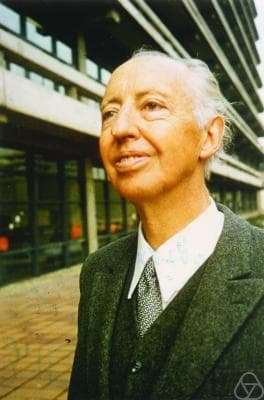
Hugo Hadwiger
Swiss mathematician (1908–1981)
1908 – 1981 · Switzerland
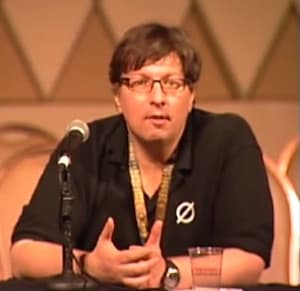
Matt Blaze
American researcher
1901 – present · United States
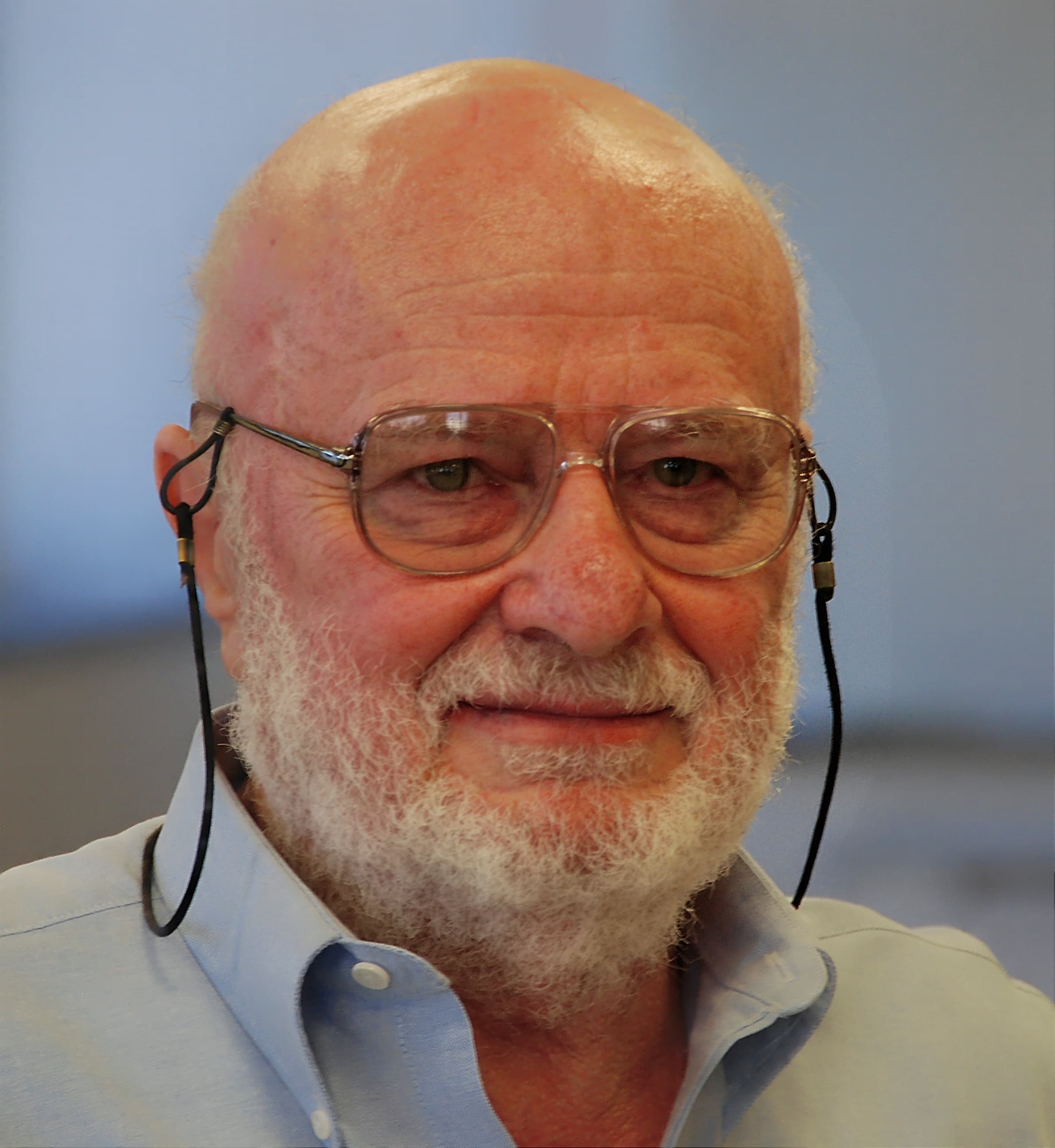
Abraham Lempel
Israeli computer scientist (1936–2023)
1936 – 2023 · Israel

Adam Back
British cryptographer and cypherpunk (born 1970)
1970 – present · United Kingdom

Adi Shamir
Israeli cryptographer (born 1952)
1952 – present · Israel