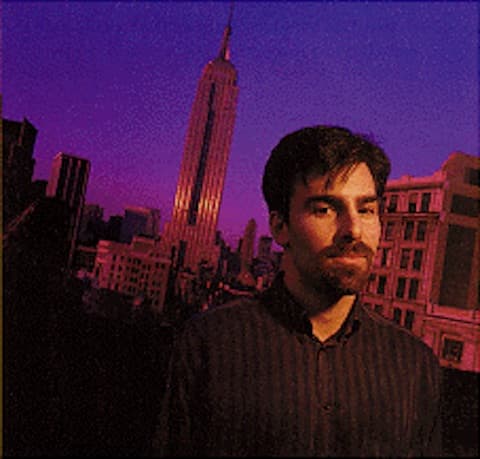
Bruce Fancher
American hacker
- Life
- 1971 – present
- Born
- April 13, 1971
- Nationality
- United States
Bruce Fancher is a former computer hacker and member of the Legion of Doom hacker group. He co-founded MindVox in 1991 with Patrick K. Kroupa.
Early Life
Bruce Fancher was born on April 13, 1971, and grew up in New York City. He is the son of Ed Fancher, who co-founded The Village Voice alongside Dan Wolf and Norman Mailer in 1955. Growing up in New York, Fancher attended YIPL/TAP meetings held on the Lower East Side, where his peers included a number of hackers and phone phreaks active during that period.
Hacker Career and Legion of Doom
Fancher became a member of the Legion of Doom, one of the most prominent hacker groups of the era. Operating under the handle Timberwolf, he developed a reputation within the hacker underground. Together with Patrick K. Kroupa, Fancher co-authored an article titled "Elite Access," a cynical and satirical exposé of the private and so-called elite hacker underground of the time. The piece was published in Phrack #36 — the publication's only humor issue, sometimes referred to as "Diet Phrack" — and was reportedly worked on and edited over a five-year period. At least three different versions of the article are known to have circulated, including an earlier technical revision containing commands related to phone company systems.
Fancher and Kroupa's activities within the hacker underground were also referenced in Kroupa's parody work "Agr1ppa," a send-up of William Gibson's Agrippa, which was leaked to the public from MindVox. The work's opening verses include a letter dated 1985 from the system operator of a pirate bulletin board system that had reportedly removed both Fancher and Kroupa for uploading cracked software infected with a virus.
MindVox
In 1991, Fancher co-founded MindVox with Patrick K. Kroupa under the company Phantom Access Technologies. The platform quickly attracted significant media attention and became well known for the colorful and hard-partying reputation of its user base. MindVox was covered extensively in major publications including Wired, Forbes, The New Yorker, and the Associated Press, and Fancher was featured or referenced in numerous books and magazine articles throughout the 1990s.
Although MindVox became notorious for the behavior of its community, available accounts suggest Fancher was not personally involved in the wilder aspects of its culture. By the mid-1990s, Kroupa's increasing struggles with drug use began to affect the platform's development and growth. Phantom Access Technologies shifted toward consulting work, helping other companies establish an online presence, and Fancher gained recognition as a software architect during this period.
The exact closure of MindVox remains somewhat ambiguous. The New York Times reported the sale of MindVox's client base and the closing of the system in 1996, while Wired was still covering what appeared to be a partially operational MindVox as late as 1997. The platform is generally considered to have gone dark or ceased public access sometime in late 1997.
Dot-Com Era and Entrepreneurship
By the late 1990s, Fancher had transitioned into the technology startup world, founding and later selling a series of companies. Among the most notable was DuoCash, a micropayments company that gained a degree of notoriety through photographs posted on MindVox, taken from the DuoCash office building located across the street from the site of the World Trade Center in the days following the September 11, 2001 attacks.
Media Presence
Fancher's work and the story of MindVox were documented across a wide range of media throughout the 1990s and into the 2000s. He appeared in or was referenced by books from authors including Bruce Sterling, Rudy Rucker, R. U. Sirius, and J. C. Herz, among others. He also participated in a CNN panel discussion on the Communications Decency Act in 1997 and was featured in Jason Scott Sadofsky's 2005 documentary BBS: The Documentary. Billy Idol's 1993 album Cyberpunk is also listed among media associated with Fancher's cultural milieu during that period.