Fravia
Software reverse engineer (1952–2009)
- Life
- 1952 – 2009
- Born
- August 30, 1952
- Died
- May 3, 2009
- Nationality
- Italy
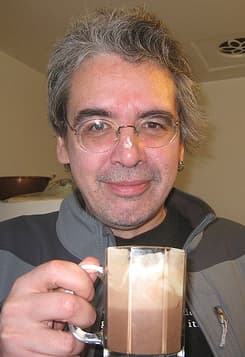
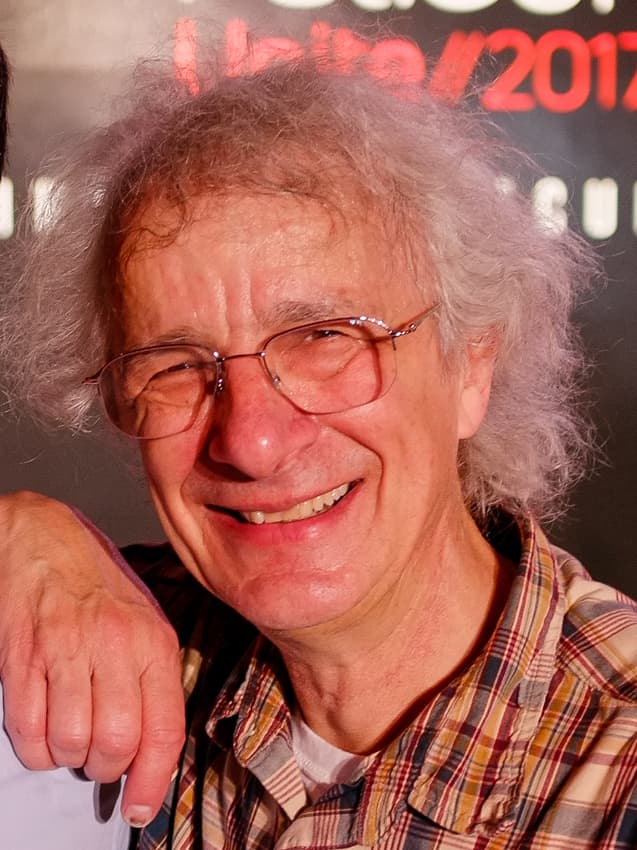
Francesco Vianello, better known by his nickname Fravia, was a software reverse engineer, who maintained a web archive of reverse engineering techniques and papers. He also worked on steganography. He taught on subjects such as data mining, anonymity and stalking.
Early Life and Education
Francesco Vianello was born on 30 August 1952. He pursued academic study in history, graduating from the University of Venice in 1994, and later earned a master's degree in history and philosophy in 1999. His scholarly interests centered on the early Middle Ages, and he published at least one academic paper on Carolingian aristocracy in the Bollettino dell'Istituto storico italiano per il Medioevo as early as 1984. Vianello was fluent in six languages, including Latin, and maintained a strong interest in linguistics-related informatics throughout his life. In the 1980s he was a member of the Esteban Canal chess club in Venice before relocating to Brussels.
Career and Online Persona
Vianello adopted the pseudonym Fravia — sometimes rendered as +Fravia or Fravia+ — for his internet work, and deliberately cultivated a fictional alter ego named Fjalar Ravia as a privacy measure against what he called "hostile seekers." His web presence began in 1995 with research into reverse code engineering (RCE).
He was a member of the High Cracking University (+HCU), an informal institution founded by a figure known as Old Red Cracker to advance RCE research. The "+" prefix attached to a reverser's nickname denoted +HCU membership. The organization published a new reverse engineering challenge each year, and those who submitted the best responses earned a place in the group. Vianello's site was formally known as "+Fravia's Pages of Reverse Engineering."
First Period: Software Reverse Engineering (1995–1999)
During his first phase of public internet work, Vianello focused on reverse-engineering software protections, decompiling and disassembling applications, and studying software copyright and patent mechanisms. His website hosted essays, tutorials, and lessons — including material attributed to Old Red Cracker — that walked readers through the steps of analyzing and cracking software protection schemes. The site also examined brute-force attacks on steganography. The Association for Computing Machinery's 2001 ACM Multimedia Workshops noted that the site contained information useful to hackers who lacked the skill to mount novel attacks independently. Vianello himself argued that reverse engineering a legitimately purchased program for the purpose of study or modification was legal in the European Union under certain restricted conditions.
Vianello later asked the community to remove copies of this early site, explaining that its original intent — to redirect young crackers toward more constructive pursuits — had only partially succeeded.
Second Period: Web Search and Information Access (2000–2008)
From 2000 onward, Vianello shifted his focus to advanced internet search methods and the reverse engineering of search engine behavior. His websites fravia.com and searchlores.org became substantial repositories of data-mining techniques and search theory. He described access to information as a right and was critical of the commercialization of the web and the proliferation of advertising in search results.
In February 2001, he delivered a conference at the École Polytechnique in Paris on the art of information searching on the internet. In 2005, he was the keynote speaker at the T2 infosec conference in Finland, where his talk was titled "The Web – Bottomless Cornucopia and Immense Garbage Dump." That same year he presented "Wizard searching: reversing the commercial Web for fun and knowledge" at REcon 2005. He also participated as a speaker at the 22nd Chaos Communication Congress. Richard Stallman credited Vianello with alerting him to the fact that file searches on Microsoft Windows systems sent network packets to external servers, a discovery Stallman later cited in a public article.
Legacy
Vianello has been described as an inspiration to many hackers and reversers. He was a friend of Chaos Computer Club founder Wau Holland, and Jon Lech Johansen — known for his work on DVD copy protection — credited Fravia's site as a formative resource during his own education as a reverse engineer. At its peak, Vianello's website received millions of visitors per year.
In September 2008, Vianello ceased updating his site after being diagnosed with squamous cell carcinoma of the tonsil, which subsequently metastasized. He resumed limited updates in March 2009 while recovering and focusing on Linux. He died suddenly on 3 May 2009 at the age of 56. Mirrors of his websites continued to circulate after his death, preserving a substantial portion of his work for subsequent generations of researchers.