Tron (hacker)
German computer hacker (1972–1998)
- Life
- 1972 – 1998
- Born
- June 8, 1972
- Died
- October 1998
- Nationality
- Germany
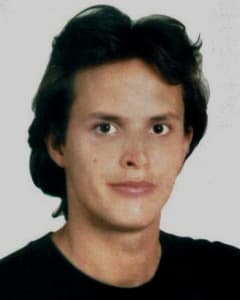
Boris Floricic, better known by his pseudonym Tron, was a German hacker and phreaker whose death in unclear circumstances has led to various conspiracy theories. He is also known for his Diplom thesis presenting one of the first public implementations of a telephone with built-in voice encryption, the "Cryptophon".
Early Life
Boris Floricic was born on 8 June 1972 and grew up in Gropiusstadt, a suburb in southern Berlin, which was part of West Berlin at the time. His interests in school centered on technical subjects. After ten years of schooling, he completed a three-year vocational education program offered by Technische Universität Berlin, graduating as a specialist in communication electronics with a major in information technology. He subsequently earned the Abitur and enrolled in computer science studies at the Technical University of Applied Sciences of Berlin.
During his studies, Floricic undertook an internship with a company developing electronic security systems. In the winter term of 1997–1998, he completed his diploma thesis, in which he developed and described the Cryptophon, an ISDN telephone with integrated voice encryption. Although parts of the work to be contributed by another student were missing, his thesis was rated as exceptional by the evaluating professor. After graduation, Floricic was unable to secure employment and continued work on the Cryptophon in his spare time.
His pseudonym, Tron, was a reference to the eponymous character in the 1982 Disney film.
Career and Research
Floricic was deeply interested in electronics and the security mechanisms of all kinds of systems. By 1995, he was active on the mailing list "tv-crypt," operated by a closed group of Pay TV hackers, where he described his interests as including microprocessors, programming languages, electronics, digital radio data transmission, and breaking the security of systems considered secure. He reported having created working clones of a chipcard used for British Pay TV and expressed intent to defeat the Nagravision/Syster scrambling system used by the German Pay TV provider Premiere.
Floricic also worked on cloning the German phonecard, ultimately succeeding in demonstrating its insecurity. While his intent was to expose vulnerabilities rather than enable fraud, the demonstrated weakness was exploited by criminals, drawing the attention of law enforcement and Deutsche Telekom. On 3 March 1995, after Deutsche Telekom updated its system, Floricic and a friend attempted to remove a public card phone from a booth using a sledgehammer in order to adapt his phonecard simulators to the latest changes. They were caught by police. Floricic was subsequently sentenced to 15 months in prison, a term that was suspended to probation.
Working alongside hackers from the Chaos Computer Club, Floricic also successfully created a working clone of a GSM SIM card, building on a theoretical attack against SIM cards outlined by American scientists, thereby demonstrating the practicability of that attack.
The Cryptophon
The Cryptophon — also spelled Cryptofon — was Floricic's prototype of an ISDN telephone with integrated voice encryption, developed as part of his diploma thesis titled "Realisierung einer Verschlüsselungstechnik für Daten im ISDN B-Kanal" (Implementation of Cryptography for Data Contained in the ISDN Bearer Channel) at the Technische Fachhochschule Berlin.
Floricic designed the Cryptophon to be inexpensive and accessible for hobbyists. The device encrypted telephone calls using the symmetric IDEA algorithm. Because IDEA was patented, the cipher was implemented on a replaceable daughter module, allowing users to substitute an alternative algorithm if desired. The system was also planned to incorporate a key exchange protocol based on RSA to guard against compromised remote stations.
The Cryptophon was built around an 8051-compatible microprocessor. For cryptographic processing, Floricic used low-cost DSPs from Texas Instruments salvaged from old computer modems. Because a single DSP lacked sufficient processing power for the chosen algorithm, he used two — one for sending and one for receiving. Floricic developed both the operating software and the cryptographic implementation himself, and devised a novel method of implementing IDEA that reduced processing time significantly.
Death
Floricic disappeared on 17 October 1998 and was found dead on 22 October 1998 in a park in Britz, in the Neukölln district of Berlin, having been hanged from a waistbelt wrapped around his neck. The cause of death was officially recorded as suicide. Members of the Chaos Computer Club, his family, and outside critics have publicly questioned the official finding, suggesting that his work in Pay TV cracking and voice encryption may have attracted the attention of intelligence agencies or organized crime. German journalist Burkhard Schröder published a book about the case, Tron – Tod eines Hackers (Tron – Death of a Hacker), in 1999, concluding that Floricic died by suicide — a conclusion that drew sharp criticism from the Chaos Computer Club and Floricic's family.
Naming Controversy
Because Floricic's family did not wish his full name to be publicly used, many German newspapers referred to him only as "Boris F." In December 2005, his parents and Chaos Computer Club spokesperson Andy Müller-Maguhn brought legal action against the Wikimedia Foundation and its German chapter, Wikimedia Deutschland e.V., seeking to prevent Wikipedia from publishing his full name. A temporary restraining order was obtained in a Berlin court on 14 December 2005. A second injunction in January 2006 temporarily prevented the wikipedia.de domain from redirecting to the German Wikipedia. The injunction against Wikimedia Deutschland was overturned on 9 February 2006, and a subsequent appeal was dismissed in May 2006.
§Related entries

Dave Buchwald
American filmmaker and hacker
1970 – present · United States

Bernhard Rosenkränzer
German free software programmer
1977 – present · Germany
Daniel Domscheit-Berg
German activist (born 1978)
1978 – present · Germany

Daniel J. Bernstein
American mathematician, cryptologist and computer scientist (born 1971)
1971 – present · United States
Felix von Leitner
German IT security expert
1973 – present · Germany