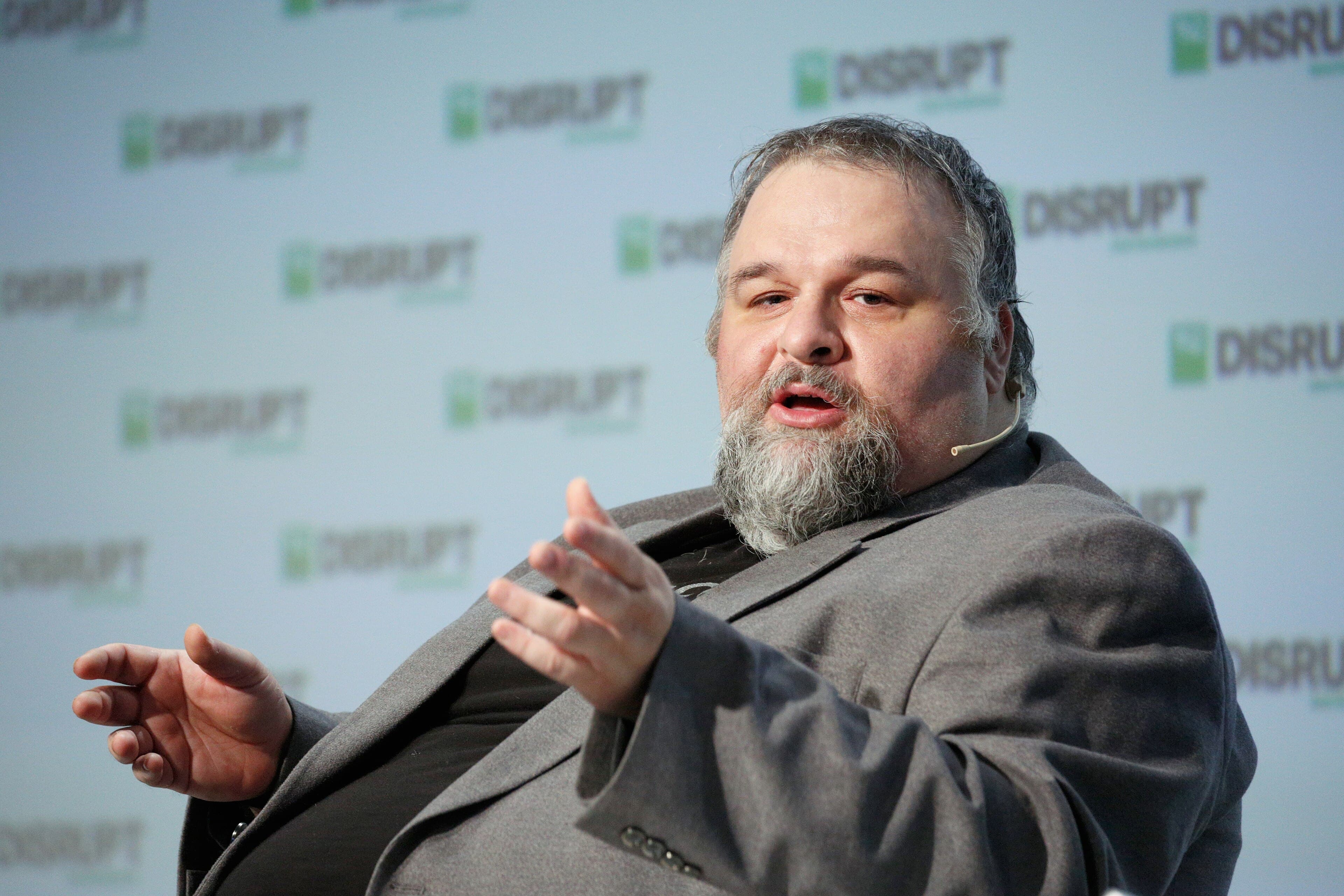
Marc Rogers (security researcher)
British cyber security researcher
Marc Rogers is a British information security expert and ethical hacker. He received media attention for uncovering vulnerabilities in modern technologies such as Google Glass and Tesla’s Model S. He was also involved in the protection of medical facilities against hackers seeking to exploit health organizations during the COVID-19 pandemic.
Early Life and Origins
Marc Rogers began his computing journey as a self-taught, lone hacker during the 1980s, operating under the handle "Cjunky." A British national now based in San Francisco, he eventually transitioned from independent hacking into the professional security industry, initially working for a series of European companies before establishing himself as one of the more prominent figures in the global cybersecurity community.
Career
In 2003, Rogers joined Vodafone, where he rose through the ranks to become head of security, a position he held for six years. By 2013, he had moved into the role of Principal Security Researcher at Lookout, a mobile security firm, where he conducted several of his most widely publicized vulnerability disclosures.
Rogers subsequently joined Cloudflare, eventually becoming Head of Information Security, a post he held until 2018. That same year, he became Vice President of Cybersecurity Strategy at Okta, Inc., remaining in that role until 2022. Following his tenure at Okta, he took on a position as senior technical advisor for the Institute for Security and Technology (IST). He is currently co-founder and chief technology officer of the startup nbhd.ai.
Notable Work
During his time at Lookout, Rogers identified a flaw in Google Glass that granted an attacker complete control of the device. He also demonstrated exploits against Apple's TouchID fingerprint sensor, gaining unauthorized control of the technology on both the iPhone 5 and iPhone 6.
In 2015, while serving as principal security researcher at Cloudflare, Rogers collaborated with Kevin Mahaffey to breach the systems of Tesla's Model S. Using a laptop, the pair were able to remotely control various vehicle functions by accessing Tesla's network and obtaining administrative credentials for the car.
Rogers has also provided cybersecurity consultation for television productions, including the drama series Mr. Robot and the factual program The Real Hustle.
DEF CON and Community Involvement
Rogers is one of the organizers and serves as director of security at DEF CON, widely recognized as the world's largest hacker conference. His involvement reflects a long-standing commitment to the broader security research community.
In 2020, Rogers co-founded the COVID-19 Cyber Threat Intelligence (CTI) League, an initiative formed to defend medical facilities and frontline health organizations from cyberattacks during the COVID-19 pandemic. The group comprised nearly 400 volunteer cybersecurity professionals, and Rogers was one of its four founding managers.
He is also a member of the U.S. Ransomware Task Force, contributing to national-level efforts to address ransomware threats.
Recognition
In 2023, Rogers received the President's Volunteer Services Award in recognition of his work with the U.S. government on cybercrime and cybersecurity threats.
Published Work
In 1999, Rogers published A New Hacker Taxonomy, in which he proposed a classification system for computer criminals. His framework organized hackers according to factors that create opportunities for cybercrime, including affordability, acceptable risk, attractiveness, availability, and anonymity. The work also examined internal motivations — such as the pursuit of pleasure or knowledge — alongside external drivers like financial gain or professional reputation-building through demonstrated intrusions.
§Entrées associées
Adrian Lamo
Informaticien américain
1981 – 2018 · États-Unis
Albert Gonzalez
Hacker américain
1981 – présent · États-Unis

Alec Muffett
Expert en sécurité anglo-américain et ingénieur logiciel, connu pour avoir créé Crack, le premier outil de déchiffrement de mots de passe Unix, et pour avoir été pionnier dans le déploiement de…
1968 – présent · États-Unis