Mathew Bevan
British computer hacker (born 1974)
- Vie
- 1974 – présent
- Né(e) le
- 10 juin 1974
- Nationalité
- Royaume-Uni
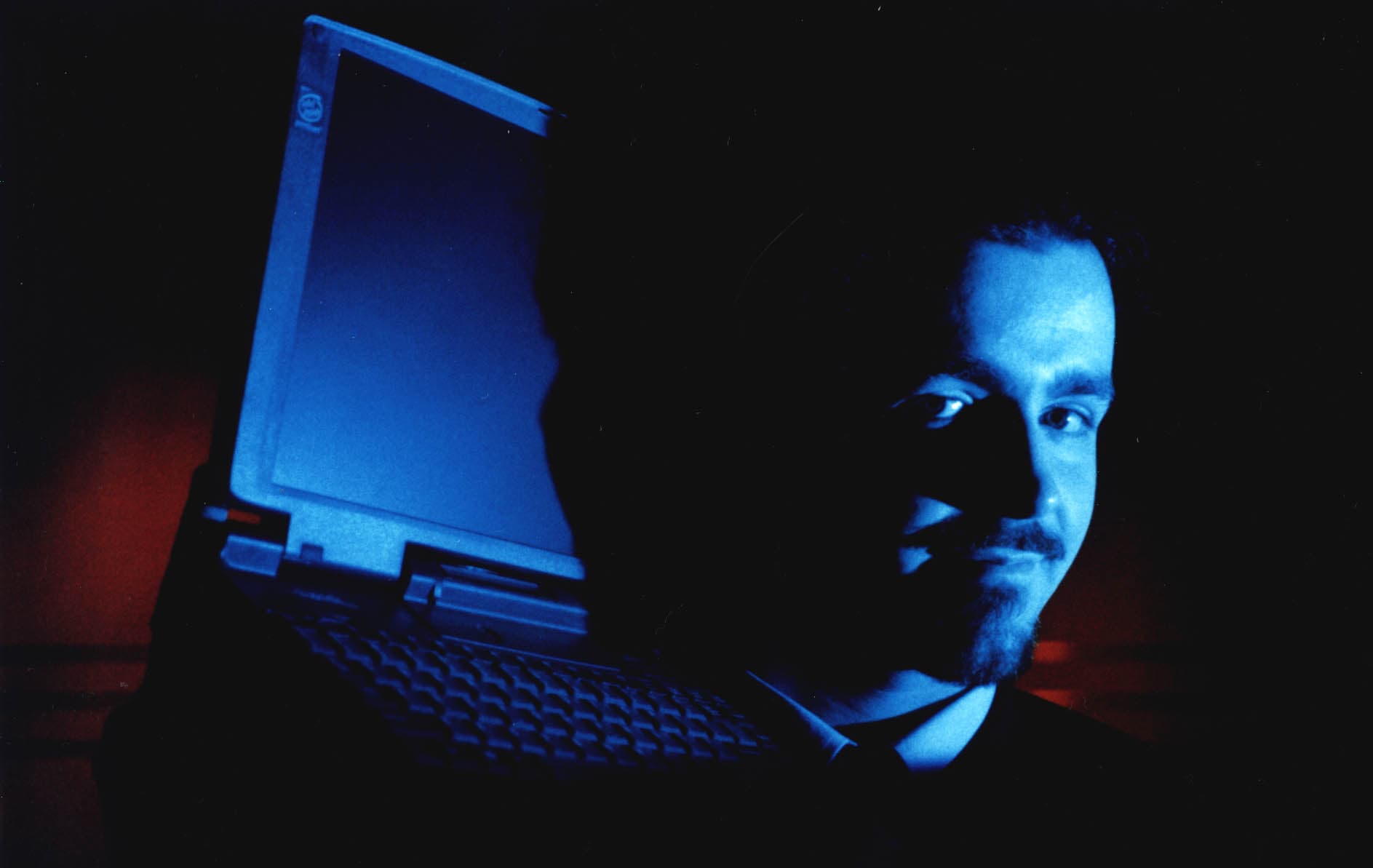
Mathew Bevan is a British hacker from Cardiff, Wales. In 1996 he was arrested for hacking into secure U.S. Government networks under the handle Kuji. At the age of 21, he hacked into the files of the Griffiss Air Force Base Research Laboratory in New York.
Early Life
Born on 10 June 1974 in Cardiff, Wales, Mathew Bevan had a difficult experience during his school years, having been bullied by peers. He turned to the online world at night as an escape from those difficulties. During this period he learned to manipulate the public telephone system in ways that allowed him to place calls anywhere in the world without the charges appearing on his telephone bill. This double life — school by day, nocturnal hacking activity by night — continued until authorities eventually uncovered his activities.
Hacking Activity
Operating under the handle Kuji, Bevan conducted his intrusions using an Amiga home computer running a blue box program called Roxbox. His primary motivation was not financial gain or espionage, but rather a personal drive to prove a UFO conspiracy theory. At the age of 21, he successfully hacked into files held at the Griffiss Air Force Base Research Laboratory in New York, one of several sensitive installations he accessed.
Bevan's activities became entangled with those of Richard Pryce, a younger hacker who used the handle Datastream Cowboy. Pryce, then 16 years old, had allegedly hacked into a research facility in Korea and dumped the contents of the Korean Atomic Energy Research Institute's database into a USAF computer system. The incident raised serious concerns among U.S. authorities: had North Korea discovered the intrusion, it might have interpreted the data theft as an act of espionage carried out by the United States Air Force and retaliated accordingly. The data was ultimately determined to be South Korean in origin, not North Korean.
Authorities began investigating Bevan while pursuing Pryce. A statement by the United States Senate Permanent Subcommittee on Investigations identified Kuji as a "Foreign Agent, possibly of Eastern European origin" — a characterization that reflected how little was initially known about him. Air Force Office of Special Investigations Supervisory Special Agent Jim Christy later stated that Bevan was one of two hackers who had nearly started a third world war.
Arrest and Legal Proceedings
On 21 June 1996, Bevan was arrested on charges related to hacking into sensitive USAF, NASA, and NATO facilities. The case proceeded to Woolwich Crown Court, where, eighteen months after his arrest, the Crown Prosecution Service concluded that it was no longer in the public interest to continue the prosecution. The CPS offered no evidence, and as a result a full acquittal was recorded in Bevan's favor.
Later Commentary
Following his acquittal, Bevan has spoken publicly about his case and its broader implications. He has drawn comparisons between his own experience and that of Gary McKinnon, another British hacker who faced U.S. government charges related to intrusions into military computer systems, describing the two cases as very similar in nature.