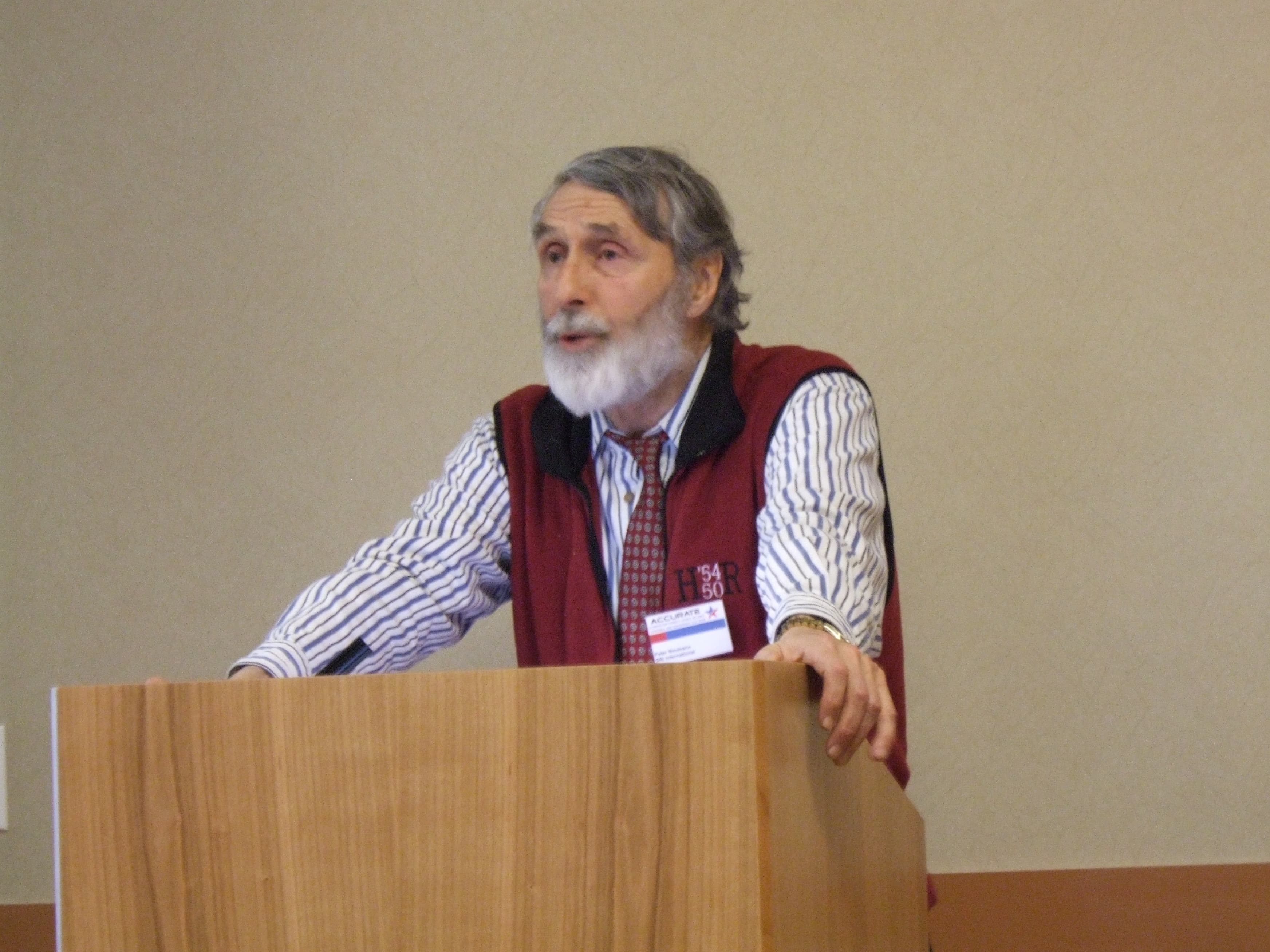
Peter G. Neumann
American computer scientist (born 1932)
- Vie
- 1932 – présent
- Né(e) le
- 1932
- Nationalité
- États-Unis
Peter Gabriel Neumann is a computer science researcher who worked on the Multics operating system in the 1960s. He edits the RISKS Digest columns for ACM Software Engineering Notes and Communications of the ACM. He founded ACM SIGSOFT and is a Fellow of the ACM, IEEE, and AAAS.
Early Life and Education
Peter Gabriel Neumann was born in 1932. He earned three degrees from Harvard University: an A.B. in Mathematics in 1954, an S.M. in Applied Mathematics and Science in 1955, and a Ph.D. in Applied Mathematics and Science in 1961. Between 1958 and 1960, he held a Fulbright scholarship in Germany. During his student years at Harvard, he had a two-hour breakfast with Albert Einstein on November 8, 1952, during which the two discussed simplicity in design.
Career
Neumann began his professional career at Bell Labs, where he worked from 1960 to 1970. During the 1960s, he contributed to the development of the Multics operating system, a highly influential project in the history of computing that shaped the design of later operating systems. In 1971, he joined SRI International in Menlo Park, California, where he has continued to work as a researcher.
Prior to his association with the RISKS mailing list, Neumann was recognized for his work on the Provably Secure Operating System (PSOS), an effort to build a formally verifiable secure operating system. In the 1980s, he collaborated with Dorothy E. Denning to develop the Intrusion Detection Expert System (IDES), an early computer intrusion detection system that served as a model for subsequent security software in the field.
Notable Work
Neumann is perhaps most widely known in computing and security circles as the longtime moderator of the RISKS Digest, a moderated mailing list and forum that documents risks to the public arising from computers and related technology. The digest is published through ACM Software Engineering Notes and Communications of the ACM. Neumann is also the founding editor of ACM Software Engineering Notes (SEN).
He founded ACM SIGSOFT, the Association for Computing Machinery's Special Interest Group on Software Engineering, establishing an important professional community for software engineering research and practice.
In 1995, Neumann authored Computer-Related Risks, published by Addison-Wesley/ACM Press, a book drawing on the extensive case material gathered through the RISKS Digest to examine systemic failures and hazards associated with computing systems.
Recognition
Neumann holds fellowship status in three major professional organizations: the Association for Computing Machinery (ACM), the Institute of Electrical and Electronics Engineers (IEEE), and the American Association for the Advancement of Science (AAAS). In 2018, he received the EPIC Lifetime Achievement Award from the Electronic Privacy Information Center, recognizing his sustained contributions to privacy and technology risk awareness. He has also been a member of the ACCURATE project.
Legacy
Through decades of work spanning operating systems, intrusion detection, formal security methods, and public risk communication, Neumann has occupied a distinctive position at the intersection of computer science research and technology policy. The RISKS Digest, which he has moderated for many years, remains a widely read resource for researchers, engineers, and policymakers concerned with the societal implications of computing systems.
§Entrées associées
Adrian Lamo
Informaticien américain
1981 – 2018 · États-Unis
Albert Gonzalez
Hacker américain
1981 – présent · États-Unis
Alec Muffett
Expert en sécurité anglo-américain et ingénieur logiciel, connu pour avoir créé Crack, le premier outil de déchiffrement de mots de passe Unix, et pour avoir été pionnier dans le déploiement de…
1968 – présent · États-Unis
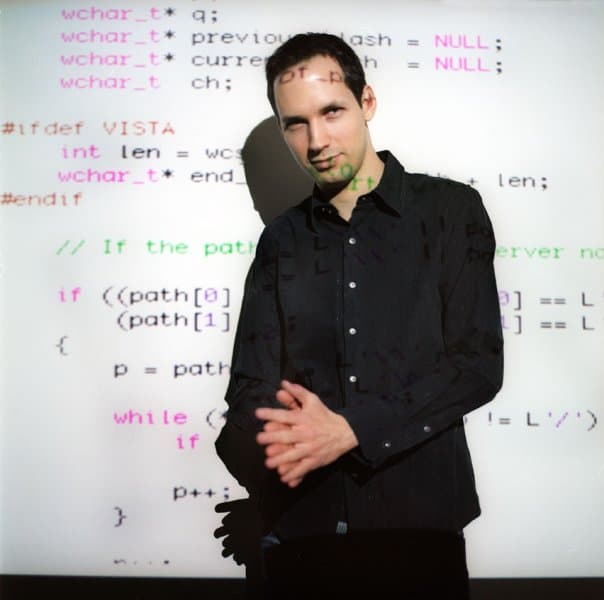
Alexander Sotirov
Alexander Sotirov est un chercheur en sécurité informatique, co-fondateur de Trail of Bits, et pionnier des techniques d'exploitation de navigateurs, notamment le Heap Feng Shui.
États-Unis