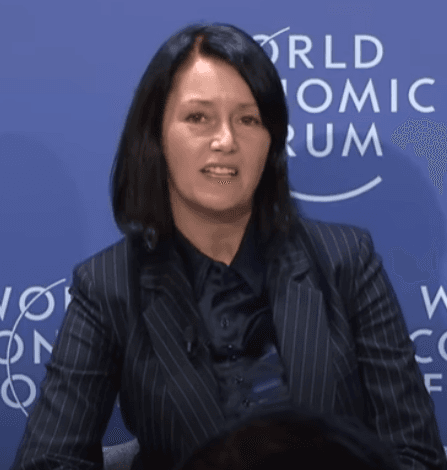
Sadie Creese
British cybersecurity specialist
Sadie Creese is a British cybersecurity specialist. She is Professor of Cybersecurity in the Department of Computer Science at the University of Oxford, Director of the Global Cyber Security Capacity Centre at the Oxford Martin School, co-director of the university's Cyber Security Centre and of the Martin School's Institute for the Future of Computing, and a fellow of Worcester College, Oxford.
Academic Background
Sadie Creese completed all three of her degrees at the University of Oxford. She holds a B.Sc. in mathematics and philosophy, an M.Sc. in computation, and a D.Phil. in computer science, awarded in 2001. Her doctoral thesis, titled "Data independent induction: CSP model checking of arbitrary sized networks," was supervised by Bill Roscoe.
Career
Before returning to academia, Creese worked at QinetiQ, where she served as Director of Strategic Programmes in the Trusted Information Management Division. From 2007 to 2011, she held the position of Professor and Director of e-Security at the International Digital Laboratory at the University of Warwick. She subsequently moved to the University of Oxford, where she has built a prominent research and leadership profile in cybersecurity.
At Oxford, Creese holds the title of Professor of Cybersecurity in the Department of Computer Science. She serves as Director of the Global Cyber Security Capacity Centre at the Oxford Martin School, co-director of the university's Cyber Security Centre, and co-director of the Martin School's Institute for the Future of Computing. She is also a fellow of Worcester College, Oxford. In addition to her departmental teaching, she lectures on cybersecurity at the Blavatnik School of Government and the Saïd Business School.
Research Interests
Creese's research covers a broad range of cybersecurity topics. Her stated interests include threat modelling and detection, with particular focus on the insider threat and threats arising from artificial intelligence. She also works on visual analytics for cybersecurity, risk propagation logics and communication, resilience strategies for business, privacy requirements, and the vulnerability of distributed ledgers and blockchains. A significant strand of her work addresses understanding cyber-harm and how it emerges for individual organizations, nations, and at the level of systemic cyber-risk. She is associated with the Cyber Security Capacity Maturity Model for Nations, a framework for assessing and developing national cybersecurity capabilities. Her teaching covers operational aspects of cybersecurity, including threat detection, risk assessment, and security architectures.
Recognition
The Engineering and Physical Sciences Research Council (EPSRC) has recognized Creese as a RISE Leader, a designation standing for "Recognising Inspirational Scientists and Engineers."
§Entrées associées
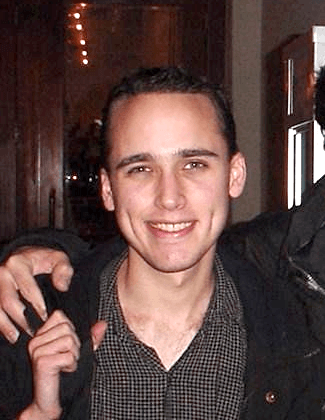
Adrian Lamo
Informaticien américain
1981 – 2018 · États-Unis

Albert Gonzalez
Hacker américain
1981 – présent · États-Unis

Alec Muffett
Expert en sécurité anglo-américain et ingénieur logiciel, connu pour avoir créé Crack, le premier outil de déchiffrement de mots de passe Unix, et pour avoir été pionnier dans le déploiement de…
1968 – présent · États-Unis