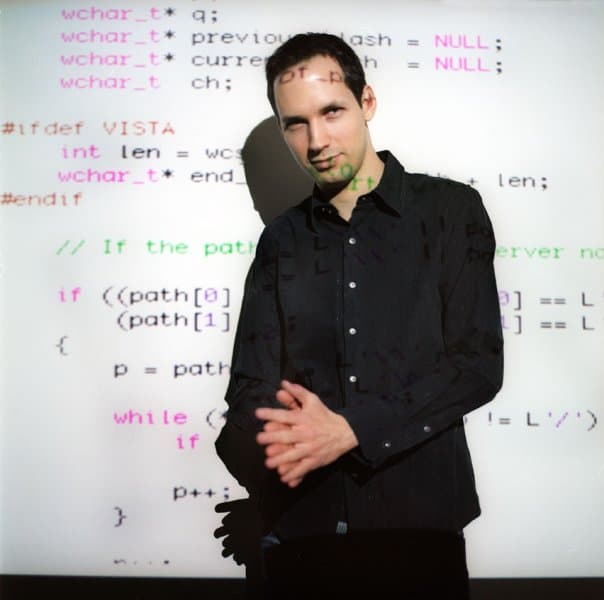
Harshvardhan Chunawala
Harshvardhan Chunawala is an Indian-born cybersecurity researcher and technologist specializing in information technology and security. He is noted for his involvement in Carnegie Mellon University's Iris Lunar Rover Mission aboard Peregrine Lander and served as a mission operator for the lunar rover, commanding it over a lunar distance. He also serves as a faculty member of the Xavier Institute of Engineering.
Early Life and Education
Harshvardhan Chunawala was born in Mumbai, India. He completed his Bachelor of Engineering in information technology at the Xavier Institute of Engineering in Mumbai before pursuing graduate studies in the United States. He earned a Master of Science in information security from Carnegie Mellon University (CMU), where he became involved in a range of research initiatives spanning space systems, energy infrastructure, and cybersecurity.
During his time at CMU, Chunawala served as a lead research fellow at the SLAC National Accelerator Laboratory, contributing to the Transactive Energy Service System (TESS) project. Funded by the U.S. Department of Energy, TESS focused on advancing grid modernization through cloud computing. His work on the project involved researching methods to protect energy data and ensure automated transaction integrity. He collaborated with David Chassin, a senior scientist at SLAC, in this capacity.
Career
Prior to his graduate work in the United States, Chunawala served in 2017 as a lead research fellow for Geographic Information Systems at the North East Centre for Technology Application and Reach (NECTAR), an organization operating under the Department of Science and Technology of the Government of India.
Since 2022, Chunawala has held a faculty position as a professor at the Xavier Institute of Engineering, the same institution where he completed his undergraduate degree.
At CMU's Information Networking Institute (INI), Chunawala worked in a space mission engineering lead capacity, where he developed a practicum program designed to train students in real-world space missions with an emphasis on cybersecurity and cloud computing. He collaborated with Dena Haritos Tsamitis, Director of the INI, and David Wettergreen, Director of the Robotics Institute's Ph.D. program, on student engagement programs in space missions and cybersecurity training.
Notable Work
Iris Lunar Rover Mission
Chunawala served as a mission operator for the Iris Lunar Rover Mission, part of the payload aboard the Peregrine Lander, which launched on January 8, 2024. In this role, he commanded the rover over a lunar distance. The Iris Rover was designed to capture scientific images for geological research; however, the mission remained operational for only ten days due to a propellant leak in the Peregrine Lander that prevented a lunar landing. Chunawala also contributed to the development of Carnegie Mellon Mission Control (CMMC), a facility intended to support future space missions from the CMU campus. He worked under the mentorship of Red Whittaker, the Fredkin Professor of Robotics at CMU and principal investigator of the Iris Lunar Rover.
Privacy and Security Research
Chunawala collaborated with Lorrie Cranor and her research team on a study examining data breach notification terminology. This research was presented at the USENIX Symposium in 2022. He also worked with Yuvraj Agarwal and Cranor on the Mites sensor project, a system designed for environmental data monitoring in buildings.
Recognition
Chunawala is noted within the cybersecurity and space research communities for his dual contributions to mission-critical space operations and applied security research. His involvement in the Iris Lunar Rover Mission, alongside his work at SLAC and CMU's INI, reflects a research profile that spans space systems engineering, energy infrastructure security, and privacy.