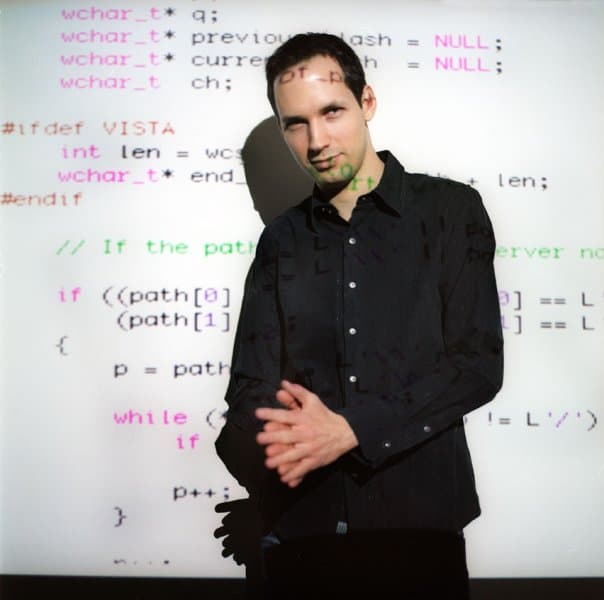
Mixter
Computer security specialist
Mixter is a computer security specialist. Mixter first made the transition out of the computer underground into large-scale public awareness, in 2000, at which time newspapers and magazines worldwide mentioned a link to massively destructive and effective distributed denial of service (DDoS) attacks which crippled and shut down major websites. Early reports stated that the FBI-led National Infrastructure Protection Center (NIPC) was questioning Mixter regarding a tool called
Public Emergence
Mixter is a computer security specialist who first came to large-scale public awareness in 2000, when newspapers and magazines worldwide reported on a series of massively destructive distributed denial-of-service (DDoS) attacks. These attacks crippled and temporarily shut down a number of major websites, including Yahoo!, Buy.com, eBay, Amazon, E-Trade, MSN.com, Dell, ZDNet, and CNN. The attacks caused an estimated $1.7 billion USD in damages.
Tribe Flood Network
Early reports indicated that the FBI-led National Infrastructure Protection Center (NIPC) was questioning Mixter in connection with a tool called Stacheldraht. Although Mixter himself was not considered a suspect, investigations ultimately identified his tools — the Tribe Flood Network (TFN) and its updated version, TFN2K — as the ones used to carry out the attacks. TFN and TFN2K are DDoS tools that Mixter had authored, and their use by others in the 2000 attacks brought significant scrutiny to his work and to the broader implications of publicly available offensive security tools.
Six/Four System
In 2002, Mixter returned to public attention in a different capacity, as the author of the Six/Four System, developed under the banner of Hacktivismo. The Six/Four System is a censorship-resistant network proxy designed to allow users to circumvent internet censorship. It operates by using "trusted peers" to relay network connections over SSL-encrypted links. Among its features, the distribution includes a program that functions as a web proxy, with all connections remaining hidden until they reach the trusted peer at the far end of the network. The Six/Four System represented a shift in Mixter's public profile, from the creator of tools associated with destructive network attacks toward the development of software oriented around privacy and freedom of information.