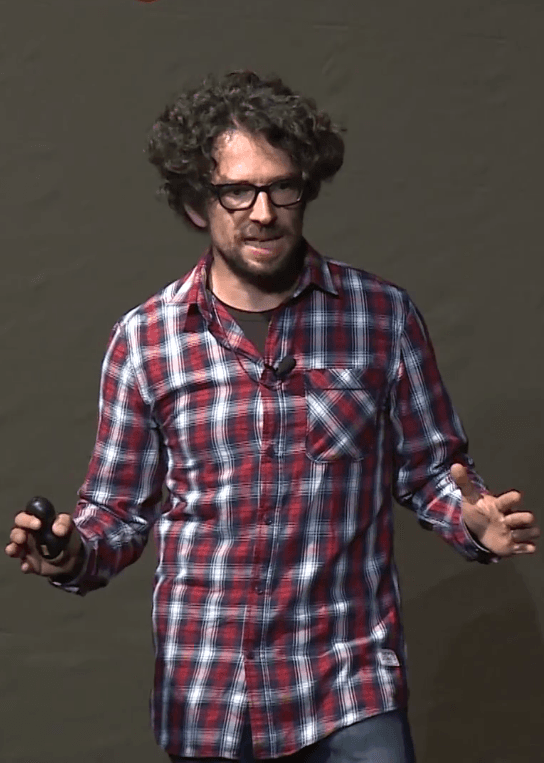
Salvatore Sanfilippo
Italian programmer and creator of Redis
- Life
- 1977 – present
- Born
- 1977
- Nationality
- Italy
Salvatore Sanfilippo, known online as "antirez", is an Italian computer programmer, hacker and author. He is best known as the creator of the Redis in-memory database, which he developed and led for over a decade.
Early Life
Salvatore Sanfilippo was born on March 7, 1977, in Campobello di Licata, a town in southern Sicily, Italy, near Gela. At the age of 17 he relocated to Palermo to study architecture, though he did not complete his university studies. He subsequently shifted his focus to computer science, a transition that would define his professional career.
Computer Security Work
Operating under the online alias "antirez", Sanfilippo established himself in the computer security community through the development of several influential open-source tools.
His most notable security contribution is hping, an open-source packet generator and analyzer for the TCP/IP protocol suite. The tool is widely used for security auditing and the testing of firewalls and network configurations.
In 1998, Sanfilippo published the Idle scan technique, a method for conducting TCP port scans in a "blind" fashion — allowing a scanner to enumerate open ports on a target system without revealing the scanner's true IP address. The technique was subsequently implemented in Nmap, one of the most widely used network security scanners in the world, bringing the method to a broad audience of security professionals.
Redis
Sanfilippo began developing Redis in 2009, motivated by a practical scalability problem he encountered while building LLOOGG, an Italian startup focused on real-time web log analysis. Frustrated by the limitations of traditional database systems for his use case, he began prototyping an in-memory data store that would evolve into Redis.
He open-sourced the project and served as its primary developer and Benevolent Dictator for Life (BDFL) for eleven years. Development of the project was sponsored successively by VMware (2010–2013), Pivotal Software (2013–2015), and Redis Labs, later renamed Redis (2015–2020). Over this period, Redis grew into one of the most popular databases in the world, used extensively for caching, message brokering, and as a primary database across a wide range of industries and applications.
On June 30, 2020, Sanfilippo announced his departure as Redis maintainer, stating a desire to pursue other interests and expressing a preference for the creative phases of software development over the maintenance-oriented work that a mature project demands. He transferred leadership of the project to Yossi Gottlieb and Oran Agra.
In December 2024, Sanfilippo announced a return to Redis the company in the role of "Redis evangelist." Following his return, he designed and implemented the Vector Set, a new data structure for Redis intended to support vector similarity search.
Other Notable Projects
Beyond Redis and his security tools, Sanfilippo has produced a range of open-source software projects. Kilo is a small text editor written in fewer than 1,000 lines of ANSI C, widely used as an educational resource for learning systems programming in C. Dump1090 is a command-line ADS-B Mode S decoder for RTL-SDR software-defined radio devices. Linenoise is a minimal alternative to the GNU Readline library. Disque is a distributed, in-memory message broker. He has also contributed to Jim Tcl, a small-footprint implementation of the Tcl programming language used in embedded environments.
Writing and Media
Sanfilippo published his first science fiction novel, Wohpe, in Italy in 2022, with an official English translation also made available. Since 2024, he has maintained an active YouTube channel publishing content in both Italian and English, covering topics including programming, technology, retrocomputing, finance, and his own projects. The channel includes a complete course on programming in the C language.
§Related entries

Bill Woodcock
Internet infrastructure pioneer (born 1971)
1971 – present · United States
Charlie Miller (security researcher)
American computer security researcher
1971 – present · United States

Chris Krebs
American cybersecurity and infrastructure security expert (born 1977)
1977 – present · United States

David Venable
Cyber security professional (born 1978)
1978 – present · United States